
If you are a US resident exploring orthodontic treatment in Mexicali, you may be pleasantly surprised to learn that your Health Savings Account (HSA) or Flexible Spending Account (FSA) can likely cover a significant portion of your dental expenses abroad. Many Americans are unaware that these tax-advantaged health accounts are not limited to domestic providers, and that the IRS explicitly permits their use for qualified medical and dental services performed by licensed professionals in other countries, including Mexico.
At Dr. Adrianna Oseguera's orthodontics practice in Mexicali, just minutes from the Calexico West Port of Entry, we regularly assist patients from California, Arizona, and beyond who leverage their HSA and FSA benefits for high-quality orthodontic care. This guide walks you through everything you need to know to use these accounts confidently and maximize your savings.
1. HSA vs. FSA: A Quick Overview
Before diving into eligibility for international dental care, it helps to understand what each account type offers:
Health Savings Account (HSA)
- Eligibility: Available to individuals enrolled in a High Deductible Health Plan (HDHP).
- Ownership: You own the account. Funds roll over year after year with no expiration.
- Tax advantages: Contributions are tax-deductible, growth is tax-free, and withdrawals for qualified medical expenses are tax-free.
- Portability: The account stays with you even if you change employers or health plans.
Flexible Spending Account (FSA)
- Eligibility: Offered through an employer's benefits plan. No HDHP requirement.
- Ownership: Employer-sponsored. Funds generally follow a "use it or lose it" policy within the plan year, though some plans offer a grace period or limited rollover.
- Tax advantages: Contributions are pre-tax, reducing your taxable income for the year.
- Key consideration: Because FSA funds expire, planning the timing of your orthodontic treatment around your plan year can help you make the most of your available balance.
Both HSAs and FSAs can be used for qualified medical expenses, which includes a wide range of dental and orthodontic treatments such as braces, Invisalign clear aligners, diagnostic imaging, and preventive dental care.
2. Are Dental Expenses in Mexico Eligible?
The short answer is yes. According to IRS Publication 502 (Medical and Dental Expenses), you can include in medical expenses the amounts you pay for medical and dental care provided by practitioners in Mexico, provided the expenses otherwise qualify as deductible medical or dental expenses.
The IRS does not restrict HSA or FSA eligible expenses to providers within the United States. What matters is that the service qualifies as a legitimate medical or dental expense and that it is performed by a licensed healthcare professional. Orthodontic treatment, including braces, clear aligners, diagnostic radiographs, and retainers, is classified as a qualified medical expense when prescribed by a licensed specialist to correct dental and skeletal malocclusion.
Dr. Adrianna Oseguera holds a Dental Surgery degree from the Universidad Autonoma de Baja California (Professional License 8556217) and a Specialty and Master's degree in Orthodontics and Maxillofacial Orthopedics from the Universidad De La Salle Bajio (Specialty License 11410417). She is also a certified Invisalign Doctor through Align Technology. All credentials are verifiable through Mexican federal registries.
3. Documentation We Provide for Your Reimbursement
One of the most common concerns patients have is whether they will receive the proper paperwork for reimbursement. At our clinic, we understand the importance of thorough documentation and provide all of the following in English:
- Itemized receipts with ADA (American Dental Association) procedure codes and clear descriptions of each service performed.
- Detailed treatment plans outlining the clinical diagnosis, prescribed treatment, estimated timeline, and itemized breakdown of all procedures.
- Proof of payment including date, amount paid (in USD), payment method, and clinic details.
- Provider credentials including Dr. Oseguera's professional license numbers, specialty certification, and clinic registration information.
- Clinical notes and diagnostic records as needed, including digital X-rays, 3D iTero scans, and photographic documentation.
We prepare this documentation package at no additional charge as part of our commitment to cross-border patient care. Our administrative team is experienced in the specific requirements of US-based HSA and FSA administrators.
4. Step-by-Step Reimbursement Process
Using your HSA or FSA for dental treatment in Mexico is straightforward. Here is the typical process:
- Verify your plan details: Before your appointment, contact your HSA or FSA administrator to confirm that orthodontic treatment is covered and ask whether there are any specific documentation requirements for international providers.
- Receive treatment at our clinic: During your visit, we perform your orthodontic services and document everything according to US reimbursement standards.
- Pay at the time of service: You can pay by credit card, debit card, cash (USD or MXN), or in some cases directly with your HSA debit card if it supports international medical transactions.
- Collect your documentation package: We provide you with all itemized receipts, treatment plans, and proof of payment before you leave the clinic.
- Submit your claim: File a reimbursement claim with your HSA or FSA administrator. Most plans accept claims online, by mail, or through a mobile app. Attach the documentation we provide.
- Receive reimbursement: Once processed, the reimbursed amount is deposited back into your account or issued as a check, depending on your plan's procedures.
For patients who pay directly with an HSA debit card, the transaction processes in real time and no separate reimbursement claim is necessary, though you should retain your receipts in case of an audit or verification request from your plan administrator.
5. Tips to Maximize Your HSA and FSA Benefits
Strategic planning can help you get the most value from your tax-advantaged health accounts:
- Review your plan's specific rules: While the IRS broadly allows HSA/FSA use for international medical expenses, individual plan administrators may have their own documentation or pre-authorization requirements. A quick phone call can prevent surprises.
- Consider your plan year timing: FSA funds typically expire at the end of the plan year. If you have remaining FSA funds approaching their deadline, scheduling dental treatment before the cutoff can help you use funds that would otherwise be forfeited.
- Keep all receipts and records: Maintain organized copies of every receipt, treatment plan, and proof of payment. Digital scans stored in the cloud are ideal for long-term recordkeeping.
- Submit claims promptly: Filing your reimbursement claim soon after treatment ensures faster processing and reduces the risk of missing any plan-year deadlines.
- Plan multi-visit treatments strategically: For orthodontic treatment that spans multiple visits (such as Invisalign or braces adjustments), you can submit claims for each visit separately as expenses are incurred, or batch them together based on your plan's preferences.
- Ask about a Letter of Medical Necessity: Some FSA plans may request a letter from your orthodontist confirming that the treatment is medically necessary. We provide these letters as part of our standard documentation package.
6. Why US Patients Choose Orthodontic Treatment in Mexicali
Beyond HSA/FSA compatibility, patients from California, Arizona, Nevada, and other US states are drawn to Dr. Adrianna Oseguera's practice for several compelling reasons:
- Proximity: Our clinic is located just 8 minutes from the Calexico West Port of Entry. Patients from the Imperial Valley, Yuma, San Diego, Phoenix, and Las Vegas can conveniently access specialist care.
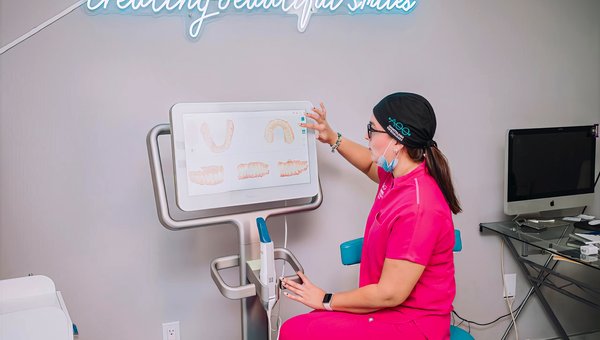
- Same clinical standards: Dr. Oseguera uses the same Invisalign SmartTrack aligners, 3D iTero digital scanners, and passive self-ligating bracket systems used in top US orthodontic practices.
- Bilingual clinical team: Our entire staff is fully bilingual in English and Spanish, ensuring seamless communication throughout your treatment journey.
- Significant savings: Orthodontic treatment in Mexico can represent substantial savings compared to equivalent treatment in the United States, allowing your HSA and FSA funds to stretch further.
- Flexible scheduling: We offer appointments spaced every 8 to 12 weeks for border-crossing patients, minimizing the number of trips while maintaining clinical precision.
7. Frequently Asked Questions (FAQ)
Can I use my HSA or FSA for dental treatment in Mexico?
Yes. The IRS allows HSA and FSA funds to be used for qualified medical and dental expenses regardless of where the provider is located, including Mexico. Orthodontic treatment is a qualified medical expense under IRS Publication 502.
What documentation do I need for HSA/FSA reimbursement from a Mexican dental clinic?
You will need an itemized receipt with ADA procedure codes and descriptions, a detailed treatment plan, proof of payment, and the provider's professional credentials. Our clinic provides all of these documents in English as part of our standard cross-border patient service.
Is orthodontic treatment considered a qualified medical expense?
Yes. The IRS classifies orthodontic treatment as a qualified medical expense when it is prescribed by a licensed specialist to correct dental alignment, bite issues, or jaw discrepancies. Braces, Invisalign, retainers, and related diagnostic procedures all qualify.
How long does the HSA/FSA reimbursement process take?
Reimbursement timelines vary by plan administrator, but most claims are processed within 2 to 4 weeks after submitting all required documentation. If you pay with your HSA debit card directly at our clinic, the transaction processes instantly and no separate claim is needed.
Can I pay directly with my HSA debit card at the clinic in Mexico?
Some HSA debit cards work internationally for medical transactions. We recommend checking with your plan administrator beforehand. If your card works at international merchants, you can pay directly. Otherwise, you can pay out of pocket with a credit card, debit card, or cash and submit for reimbursement afterward.