Short answer: Invisalign® gently shifts your natural teeth, roots, and bite into proper alignment without shaving down healthy enamel, while dental veneers bond porcelain or composite shells onto the front surface to alter tooth shade, shape, and symmetry. If your teeth are crowded, rotated, or misaligned, aligning first with Invisalign prevents irreversible tooth reduction and stops premature veneer chipping.
Every week, adult patients from Calexico, El Centro, Yuma, San Diego, and Mexicali sit in our consultation chair with the exact same question: “I want a better smile as soon as possible. Should I get dental veneers in a few days, or invest a few months in Invisalign clear aligners?”
This dilemma has become especially urgent across border dental hubs like Los Algodones and Tijuana, where high-volume clinics routinely promote “instant orthodontics”—shaving down crooked or crowded teeth to place full sets of porcelain veneers in a single week. On paper, skipping months of aligners sounds convenient. Clinically, however, masking crooked teeth with aggressive restorations when your underlying enamel is healthy can permanently compromise nerve vitality, gum health, and bite stability.
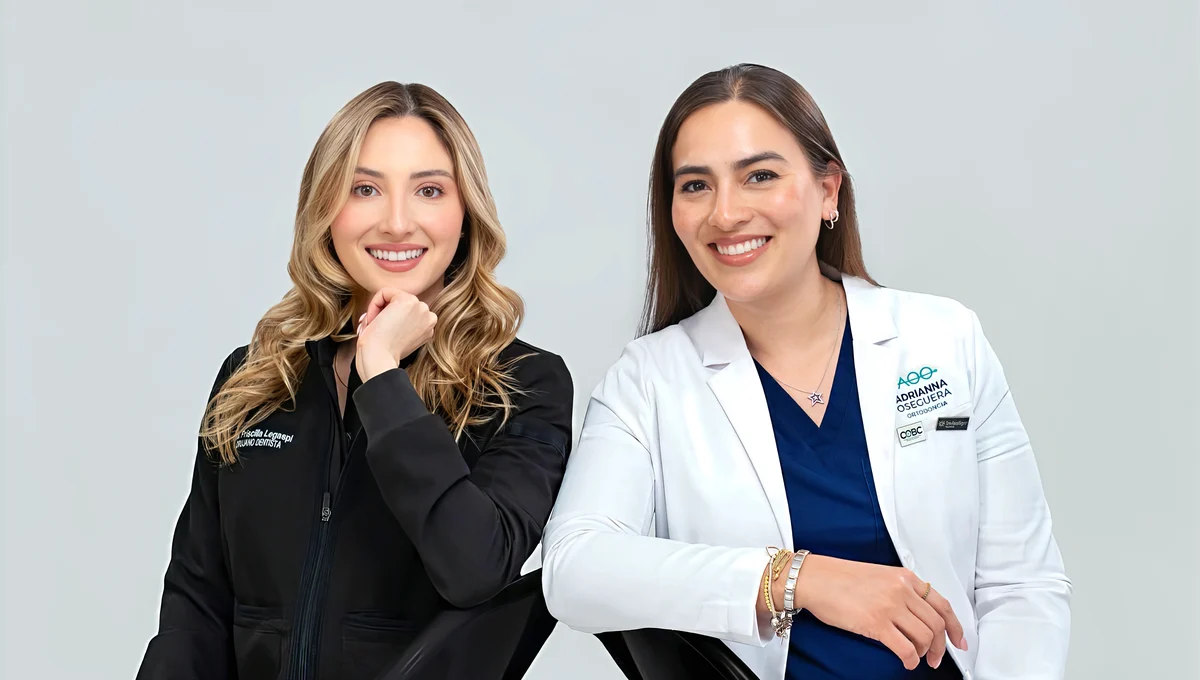
At our Mexicali clinic—located an 8-minute walk from the Calexico West Port of Entry—you never receive a one-sided sales pitch. Dr. Adrianna Oseguera (DDS UABC License #8556217 · Master’s & Specialty in Orthodontics and Dentofacial Orthopedics, Universidad De La Salle Bajío License #11410417 · Postgraduate Orthodontics Lecturer · Certified Invisalign® Doctor) works side-by-side under the same roof with Dr. Priscilla Legaspi (DDS UABC · Trained in Full Veneers & Prepless Contact Lenses [2022], Dental Photography [2022], Digital Dentistry exocad/exoplan [2023], and Only Veneers with Dr. Krystal [2026]). Together, they evaluate both your bite biomechanics and your tooth aesthetics to recommend the most conservative, long-lasting path.
1. The Core Difference: Tooth Position vs. Surface Architecture
Choosing correctly starts with separating alignment issues from shape and shade issues. Treating a tooth-position problem with a prosthetic restoration is the most common—and costliest—mistake in cosmetic dentistry.
What Invisalign® Clear Aligners Actually Fix
Invisalign uses custom 3D-printed SmartTrack® aligners to apply gentle, biologically controlled forces that move both the visible crown and the underlying root through bone.
- Enamel preservation: Zero prosthetic drilling. Your natural enamel stays completely intact (aside from occasional micro-polishing between teeth—known as IPR, thinner than a fingernail—when millimeter-level space is needed).
- Best suited for: Crowded or overlapping teeth, rotated incisors, gaps/diastemas, deep overbites, crossbites, open bites, and uneven edge wear caused by an unbalanced bite.
- What aligners don’t fix alone: Deep intrinsic discoloration (such as tetracycline staining or dark root-canal teeth), chipped incisal edges, or congenitally small teeth (peg laterals).
What Porcelain or Composite Veneers Actually Fix
Veneers are thin custom shells—made of lab-crafted porcelain (lithium disilicate or feldspathic ceramic) or hand-sculpted aesthetic composite—bonded permanently to the front surface of teeth through our comprehensive dentistry & smile design service.
- Enamel preservation: Entirely dependent on your starting tooth alignment. When teeth are already straight, modern ultra-thin or minimal-prep veneers require negligible enamel conditioning. When teeth protrude or overlap, irreversible grinding is required to force alignment visually.
- Best suited for: Intrinsic stains resistant to whitening, worn or fractured edges, disproportionate tooth widths, and subtle gaps when the bite is already balanced.
- Biomechanical limitation: Veneers do not move roots or correct occlusion. If your bite hits unevenly today, it will continue hitting unevenly against brittle porcelain—leading to chipping or debonding.
2. The Hidden Trap of “Instant Orthodontics” with Border Veneers
When a tooth sits rotated forward or tucked behind its neighbor, placing a veneer over it creates a basic geometry problem: porcelain needs physical thickness to look natural and resist breakage. If the tooth already sticks out, the dentist must drill away a heavy layer of healthy outer enamel—often cutting down into the softer, sensitive dentin layer underneath—just to keep the final smile from looking bulky.
Clinical Warning: Shaved Enamel Never Grows Back
Avoidable complications from rushed veneer makeovers over crooked teeth include irreversible enamel loss (requiring lifelong replacements), weaker bonding to exposed dentin, chronic gum inflammation around bulky margins, and ceramic fractures caused by uncorrected bite forces.
3. Clinical Comparison Matrix: Invisalign vs. Porcelain vs. Composite vs. Combined
| Clinical Factor | Invisalign® Only | Porcelain Veneers Only | Composite Bonding / Veneers | Combined Protocol (Align + Aesthetics) |
|---|---|---|---|---|
| What it changes | Real tooth & root position, gum levels, bite | Tooth shade, shape, length, surface texture | Minor chips, edge contours, small gaps | Balanced functional bite + ideal aesthetics |
| Healthy enamel removal | None (100% non-invasive) | Minimal to moderate (irreversible) | None to ultra-minimal (additive) | Zero or ultra-conservative |
| Typical timeline | 6–14 months (mild/moderate adult cases: 4–9 months) | 2–3 visits | 1–2 visits | Short aligner phase + final cosmetic finish |
| Color stability | Keeps natural enamel (supports whitening) | Very high (stain-resistant ceramic) | Moderate (requires periodic polishing) | High when finished with ceramic or whitening |
| Long-term upkeep | Nighttime clear retainers | Careful biting + eventual replacement | Annual polishing + occasional touch-ups | Nighttime retainers + routine hygiene visits |
| Protects jaw & bite? | Yes, balances occlusal contacts | No, cosmetic facade only | No | Yes—prevents premature veneer chipping |
4. Decision Guide by Smile Concern
| Your Starting Situation | Recommended Path | Clinical Reasoning |
|---|---|---|
| Healthy teeth & good shade, but crowded or crooked | Invisalign® Only (+ optional whitening) | Preserves 100% of your natural tooth structure. Most patients are thrilled once teeth are aligned and brightened—no veneers needed. |
| Straight teeth & stable bite, but severe stains or worn edges | Aesthetic Veneers (Dr. Priscilla Legaspi) | Because teeth are already aligned, minimal-prep porcelain or conservative composite achieves ideal symmetry with minimal enamel work. |
| Crooked teeth PLUS chipped edges, wear, or small lateral teeth | Align-First Protocol (Dr. Adrianna + Dr. Priscilla) | A brief aligner phase aligns roots and gum margins first; final edge bonding or ultra-thin veneers then require virtually zero healthy tooth grinding. |
| Dark spaces (“black triangles”) near the gumline | Invisalign® with gentle IPR or additive bonding | Bringing teeth slightly closer eliminates dark triangular gaps naturally without making teeth look overly wide. |
5. Our Multidisciplinary Protocol: “Align → Whiten → Restore”
Having both an orthodontist and a cosmetic dentist collaborate in the same clinic eliminates unnecessary drilling. Here is how our Align → Whiten → Restore sequence works:
- Step 1 — Digital Alignment (Dr. Adrianna Oseguera): Using Invisalign®, we align crowded incisors, level uneven gumlines, and balance your bite. When the goal is pre-restorative alignment rather than complex jaw correction, this phase is often remarkably brief.
- Step 2 — Professional Whitening: Before matching any shade, we brighten your natural enamel. Many patients discover that straight, white natural teeth already deliver the smile they wanted—saving them from any restorative work at all.
- Step 3 — Ultra-Conservative Finishing (Dr. Priscilla Legaspi): Any remaining chipped edges, worn lengths, or undersized teeth are refined with micro-composite edge bonding or ultra-thin minimal-prep veneers, achieving natural translucency supported by a healthy bite.
6. Your First Visit: 3D iTero® Scan, ClinCheck® & Interest-Free Options
Many patients delay scheduling because they dread messy putty impressions, high-pressure sales tactics, or financial surprises. Your first visit in Mexicali is strictly diagnostic and transparent:
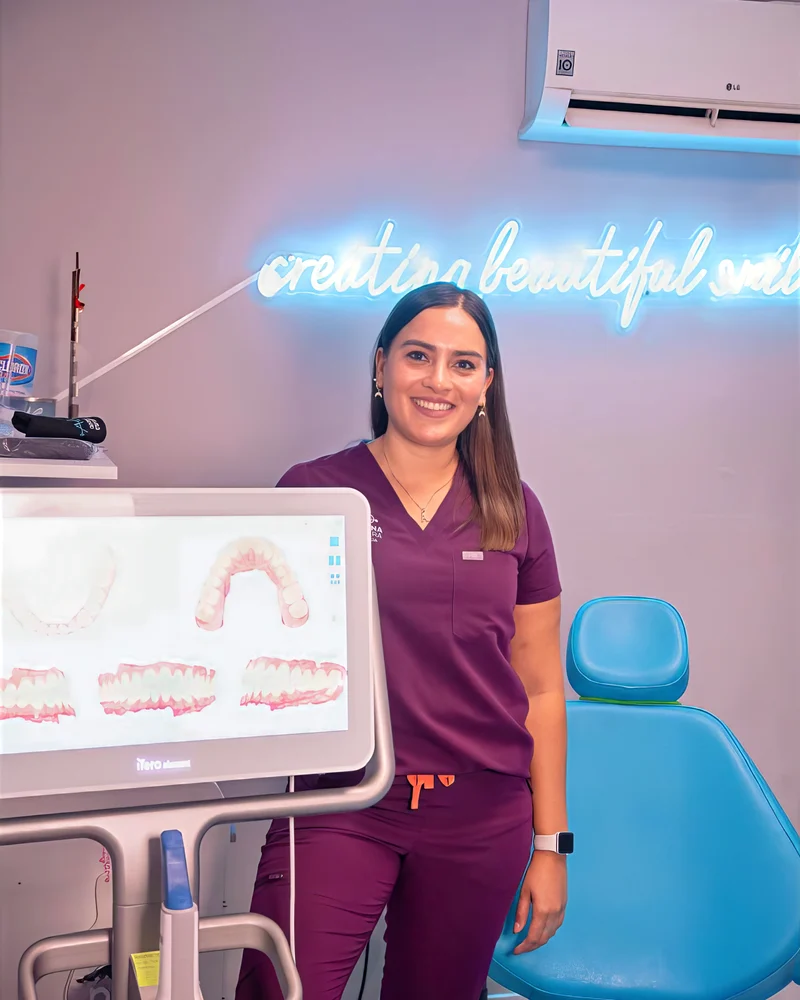
- Fast 3D iTero® Intraoral Scan: No goopy trays or gagging. We capture a high-precision digital 3D model of your teeth and bite in minutes.
- ClinCheck® Smile Simulation: Preview how your natural teeth can move stage-by-stage on screen before committing to aligners or restorations.
- Tailored Plan & Cross-Border Convenience: After your diagnostic evaluation, you receive an honest clinical recommendation and a personalized quote with 0% interest monthly payment plans. US patients also receive itemized receipts formatted for HSA/FSA reimbursement.
7. Frequently Asked Questions (FAQ)
Can dental veneers replace Invisalign or braces if my teeth are crooked?
Only for very minor rotations or tiny gaps. For moderate crowding or bite problems, using veneers instead of orthodontics forces irreversible enamel grinding and leaves your bite unbalanced.
Can I still get Invisalign if I already have veneers or crowns?
Yes. Inside ClinCheck® software, Dr. Adrianna plans precise, safe tooth movements around existing restorations using specialized bonding protocols that protect porcelain surfaces.
If I combine Invisalign and veneers, does it add years to my timeline?
Usually no. Pre-restorative aligner phases designed to position teeth for conservative aesthetics typically take 4 to 9 months, followed immediately by final whitening or cosmetic finishing.
Which lasts longer: Invisalign results or porcelain veneers?
Aligned natural teeth can last a lifetime when maintained with nighttime retainers. Porcelain veneers typically last 10–15+ years depending on oral hygiene and bite forces before needing replacement.
Are composite veneers or porcelain veneers better after Invisalign?
If you only need minor edge smoothing after alignment, additive composite bonding is ideal and completely non-invasive. If you want a dramatic change in shade and full-surface resistance to staining, minimal-prep porcelain offers superior longevity.
How often do patients from El Centro, Yuma, or San Diego need to cross into Mexicali?
Because we dispense Invisalign aligner sets in phases, cross-border checkups are typically spaced every 8 to 10 weeks. Our clinic is an 8-minute walk from the Calexico West pedestrian crossing.
How can I verify my orthodontist’s specialty credentials in Mexico?
Every licensed dentist and specialist in Mexico is registered publicly through the SEP National Registry. Dr. Adrianna Oseguera holds a Dental Surgery degree from UABC (License #8556217), a Master’s & Specialty in Orthodontics from Universidad De La Salle Bajío (Specialty License #11410417), and serves as a Postgraduate Orthodontics Lecturer.