
Short answer: most orthodontic treatment takes about 18 to 36 months with braces (about 12 to 24 with self-ligating braces) and about 6 to 18 months with Invisalign. Your own timeline depends on how complex your bite is, your age and how closely you follow the plan, so only an orthodontic evaluation can give you a realistic estimate.
At Dr. Adrianna Oseguera's orthodontics practice in Mexicali, treatment length is one of the first questions patients ask, including many who cross from Calexico, El Centro and Yuma. This guide explains the typical ranges, what makes treatment shorter or longer, and what to ask at your first visit. The numbers are general ranges, not promises: every mouth is different.
1. How Long Do Braces and Invisalign Take?
The table shows the ranges orthodontists commonly describe for each option. Complex cases can run longer and simple cases can finish sooner.
| Treatment | Typical active time | What mostly decides it |
|---|---|---|
| Metal braces | About 18 to 36 months, depending on complexity | Crowding, bite correction, and whether elastics or extractions are needed. |
| Ceramic or sapphire braces | Similar to metal braces | The same biological factors; the look of the bracket does not change how fast teeth move. |
| Self-ligating braces | About 12 to 24 months, depending on complexity | Bite complexity and appointments kept; bracket type alone does not guarantee a shorter treatment. |
| Invisalign | About 6 to 18 months, longer for complex cases | Complexity, and wearing the aligners about 20 to 22 hours a day. |
| Early orthopedics (children) | A first phase that often lasts several months to a year or more | Growth, the problem being guided and cooperation; braces may follow later if needed. |
These are general ranges only. A mild alignment case and a case that needs bite correction can sit at opposite ends of the same row, and retention continues after the active phase.
2. What Decides How Long Your Treatment Will Take?
Two people can start on the same day and finish months apart. The main reasons:
- How complex the problem is. Mild crowding or small gaps usually move faster than a pronounced overbite, underbite, crossbite or severely crowded teeth.
- Your age and growth. In children and teens, jaw growth can be guided. In adults, treatment relies mainly on moving teeth through bone, which is a gradual process.
- How closely you follow instructions. Invisalign aligners only work when worn about 20 to 22 hours a day, and elastics, if prescribed, must be worn as directed.
- Keeping your appointments. Skipped or delayed visits slow down every type of treatment.
- Hygiene and broken appliances. A bracket that comes off or inflamed gums can pause progress until they are fixed.
- Extra steps. Some cases need extractions, other dental work or a mid-treatment refinement of the plan.
- Your own biology. Teeth respond at different speeds from person to person.
3. What Are the Phases of Orthodontic Treatment?
The active part is only one of three stages:
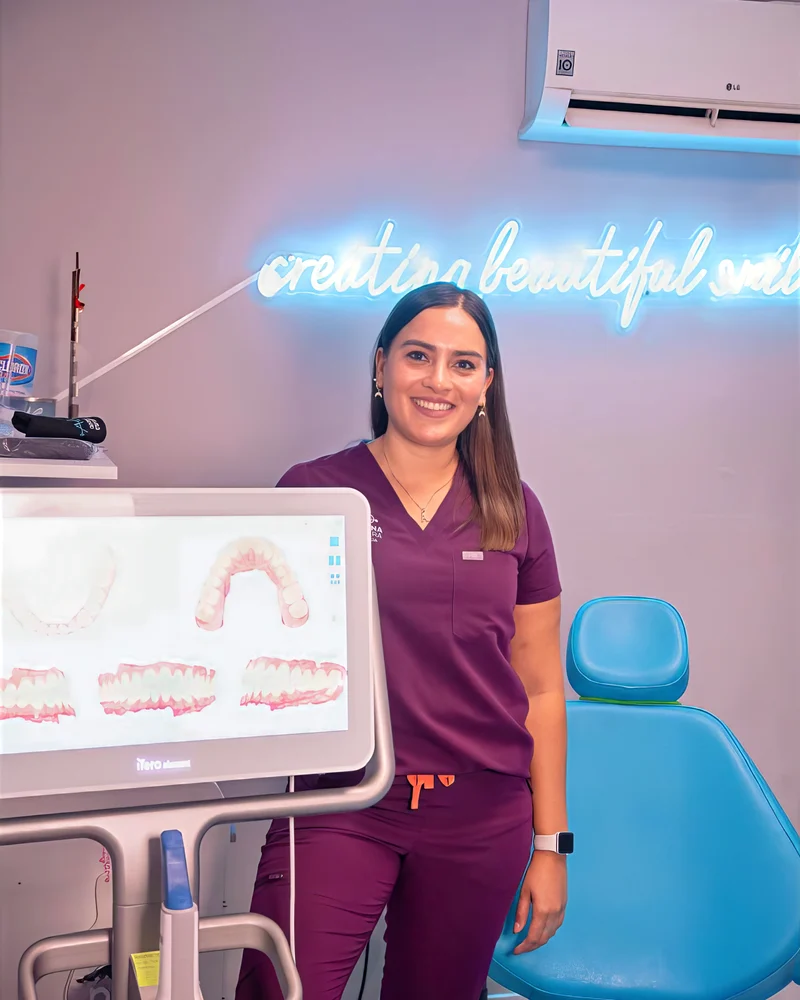
- Evaluation and planning. At your first visit, Dr. Oseguera examines your teeth and bite and takes a 3D scan with our iTero intraoral scanner, with no impression trays. The scan helps plan the movement and set expectations for how long your case may take.
- Active treatment. Braces or aligners move the teeth into position. This is the period described in the table above.
- Retention. After the braces come off, retainers hold the new position. Teeth can drift back, so retainers are often worn for years.
Retention is part of the treatment, not an optional extra: it protects the result you spent months achieving.
4. Is Invisalign Faster Than Braces?
Not automatically. For mild to moderate cases, Invisalign often finishes in a similar time frame or somewhat sooner. For complex bites, braces are sometimes the better tool, and no appliance can shorten a plan that biology limits. Both systems move teeth at roughly the same biological pace; what changes is control, comfort and your daily routine.
The bigger difference is discipline. Braces work all day whether or not you think about them, while aligners only work if you wear them. If you tend to take them out often, braces may end up being the faster option for you.
Read more about Invisalign, braces, or our side-by-side comparison for adults, Invisalign vs. braces.
5. How Long Does Treatment Take for Kids and Teens?
Children are often evaluated around age 7, when the first permanent teeth appear and growth can still be guided. An early phase of maxillofacial orthopedics may last several months to a year or more, and it is often followed by a resting period before braces, if braces are needed at all. Not every child needs both phases, and the early phase may reduce what braces have to do later.
Teens usually start braces or aligners once most permanent teeth are in, and their treatment commonly falls in a similar 18 to 36 month range. Adults can be treated too: there is no age limit as long as teeth and gums are healthy.
6. Can Orthodontic Treatment Be Faster?
You cannot force teeth to move faster than the bone allows, but you can avoid the delays that add months:
- Wear aligners 20 to 22 hours a day, and wear elastics exactly as directed.
- Keep every appointment, and reschedule early if you must miss one.
- Brush and floss carefully around brackets and wires.
- Avoid hard or sticky foods that break brackets, and contact the clinic quickly if something does break (see our care and emergencies guide).
What does not help: wearing aligners fewer hours and "catching up" later, skipping visits, or pushing teeth harder than the plan allows, which can injure roots and gums. Some clinics advertise accelerated options. Ask your orthodontist whether any of them is actually appropriate for your case, and be cautious about anyone who promises an exact finish date.
7. What If I Live Far Away or Cross the Border?
Braces typically need adjustment visits every 4 to 8 weeks, so distance matters most there. Our clinic is about 8 minutes from the Calexico West Port of Entry, which makes regular visits practical for many Imperial Valley patients. For Invisalign the schedule can be lighter, and patients in Phoenix and Las Vegas can combine in-person visits with remote check-ins; see how remote Invisalign monitoring from Mexicali works. Your orthodontist will tell you how often you need to come in after your evaluation.
8. What Should I Ask at My First Consultation?
- How long do you expect my treatment to take, and what could make it longer?
- Which option fits my case best, braces or Invisalign, and why?
- How often will I need appointments, and can any be done remotely?
- What happens after treatment, and what retainer will I use?
- What do I need to do at home to stay on schedule?
You can book online, message us on WhatsApp at (686) 140-9235, or call (686) 566-5506. Your consultation includes the examination and the 3D scan, so the answers are based on your own mouth and not on averages.
9. Frequently Asked Questions (FAQ)
How long does orthodontic treatment take on average?
Braces commonly take about 18 to 36 months (12 to 24 with self-ligating braces) and Invisalign about 6 to 18 months, followed by retention. The exact time depends on how complex your bite is, your age and how closely you follow instructions, so an evaluation is needed for a real estimate.
Is Invisalign faster than braces?
Not always. For mild to moderate cases Invisalign is often similar or somewhat quicker, but complex cases can take longer with aligners, and aligners only work when they are worn about 20 to 22 hours a day. The better choice is the one that fits your case and your habits.
Why is my treatment taking longer than expected?
Common reasons are missed appointments, aligners worn fewer hours than prescribed, broken brackets, elastics not worn as directed, or teeth that respond more slowly than predicted. Talk to your orthodontist, because sometimes the plan only needs a small refinement.
Do I need a retainer after treatment, and for how long?
Yes. Teeth tend to drift after braces or aligners, so retainers are needed after treatment and are often worn for many years. Your orthodontist will tell you the schedule that fits your case.
How often will I need appointments?
With braces, adjustment visits are commonly every 4 to 8 weeks. Invisalign schedules vary and can be lighter, and long-distance Invisalign patients can combine in-person visits with remote monitoring. Your orthodontist sets the schedule after your evaluation.
At what age can orthodontic treatment start?
Children can be evaluated around age 7 to see whether early guidance of jaw growth would help. Teens and adults can start treatment when their teeth and gums are healthy, and there is no upper age limit.